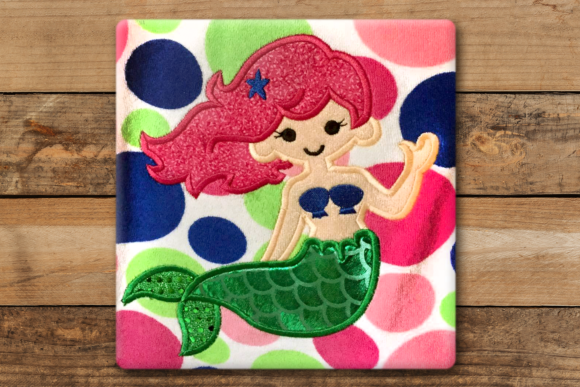
Mermaid Applique: A Designer’s Real-World Review
As an embroidery designer who has spent countless hours digitizing and stitching out thousands of designs, I have developed a keen eye for what works in the hoop and what looks good on paper but fails in thread. When I first loaded the Mermaid Applique into my software, I was looking for more than just a cute summer motif. I was evaluating its potential as a reliable asset for my craft business and for the clients who trust me with their custom apparel projects. This review breaks down how this design performs in real-world scenarios, from baby onesies to boutique tote bags.
First Impressions and Visual Personality
The immediate appeal of this applique design lies in its balanced simplicity. It captures the whimsical essence of a mermaid without relying on excessive detail that can often get lost in small hoop sizes. The mood is playful and light, perfectly suited for the Beach category, yet it retains enough structure to look professional rather than amateurish. For an Etsy seller or a small shop owner, visual clarity is crucial. Customers scrolling through digital listings need to instantly recognize the subject matter. This design delivers that instant recognition.
What stands out is the layout. The silhouette is clean, which suggests that the digitizer considered the limitations of machine embroidery. Complex curves in tails and hair can be notorious for causing thread breaks or puckering if not handled with care. Here, the shapes appear manageable, promising a smoother stitching experience. The "adorable little mermaid" description holds true, but from a technical standpoint, I see a design that prioritizes stitch integrity over unnecessary complexity.
Real-World Application: From Mockup to Finished Product
To truly test a machine embroidery design, you must imagine it on actual fabric. I envisioned this Mermaid Applique on a few specific items to gauge its versatility.
- Custom Apparel: On a youth-sized sweatshirt, the design sits comfortably on the left chest or as a larger centerpiece on the back. The applique technique means less thread bulk, making it ideal for garments that need to remain soft against the skin.
- Tote Bag Design: For canvas totes, the contrast between the embroidery threads and the textured fabric creates a lovely handmade product feel. The design is bold enough to stand out against natural cotton or denim.
- Baby Embroidery: This is perhaps the strongest use case. Baby clothes require designs that are not too dense to avoid irritation. Since the 4x4 version is described as "all embroidery" without the applique fabric layer in some iterations, or using minimal fabric, it remains lightweight. It makes for a charming personalized gift that parents will appreciate for its durability and comfort.
When preparing a custom embroidered tote bag for a client, I always consider how the design interacts with the fabric texture. This Mermaid Applique seems forgiving. It does not rely on microscopic details that might disappear on a terry cloth towel or get distorted on a stretchy knit. For an embroidery project intended for frequent washing, such as a kitchen towel or a child’s cap, this level of robustness is essential.
Technical Considerations for the Serious Crafter
While the design is appealing, practical application requires attention to detail. As a reviewer, I must highlight where caution is needed. If you are working with the 4x4 version, remember that space is limited. Ensure that your hoop size matches the file dimensions exactly to avoid clipping the tail or the hair.
Stitch density is another critical factor. Appliance designs typically use a running stitch or zigzag to secure the fabric patch, followed by a satin stitch or fill stitch for decorative elements. You should check the stitch density in your software before hitting start. If the density is too high for thin fabric, you risk perforation. Conversely, if it is too low, the underlying fabric might show through, ruining the visual appeal. I recommend testing the design on scrap fabric first, ideally the same type you plan to use for the final product.
For those using dark fabric, thread color contrast becomes vital. A mermaid design often involves blues, greens, and skin tones. On navy or black garments, ensure your thread colors are vibrant enough to pop. Using a white or light-colored stabilizer can also help brighten the background if the fabric is sheer or dark.
Commercial Viability and Brand Consistency
For digital product sellers and creative entrepreneurs, the value of a design extends beyond the stitch count. It is about how it enhances your brand. Does this Mermaid Applique fit your aesthetic? If your boutique focuses on whimsical, ocean-inspired themes, this is a strong addition to your design assets. It supports brand consistency by offering a cohesive look across different products, from patches to pillow covers.
Customer trust is built on quality. A poorly stitched design can lead to returns and negative reviews. Because this design uses applique techniques, it generally reduces the risk of thread nests and bird nests compared to full-fill designs. This reliability translates to professionalism. When a customer receives a finished product with clean edges and no loose threads, their engagement with your brand increases. They are more likely to return for holiday embroidery or other seasonal items.
Practical Designer Notes
Before you commit to a large batch of commercial embroidery, keep these tips in mind:
- Check the Files: The product description mentions multiple embroidery files. Verify that you have the correct format for your machine (PES, DST, JEF, etc.). Do not assume compatibility; always convert if necessary using reliable software.
- Stabilizer Selection: Use a cut-away stabilizer for stretchy fabrics like t-shirts and a tear-away for stable woven fabrics like aprons or tote bags. This ensures the design remains flat and does not distort after washing.
- Test Stitch Out: Always run a test on similar fabric. Check for thread breaks, especially in tight corners of the tail or hair. Adjust tension if needed.
- Licensing: Confirm the license terms. Can you sell the finished product? Can you include it in a digital bundle? Most designers allow selling finished physical items, but reselling the digital embroidery file itself is usually prohibited. Clarify this before listing on Etsy or other platforms.
- Mockups: Create printable mockups or digital previews showing the design on various backgrounds. This helps customers visualize the final result and boosts conversion rates.
In conclusion, the Mermaid Applique is a solid choice for makers looking to add a touch of summer charm to their offerings. It balances aesthetic appeal with technical practicality. Whether you are creating a one-of-a-kind personalized gift or stocking your small shop with seasonal merchandise, this design holds up under scrutiny. It respects the constraints of the hoop while delivering a delightful visual impact. For any embroidery enthusiast or professional, it is a worthy addition to the library, provided you take the time to test and adjust for your specific materials.